Beat Party:Rhythm Dance Game
- 4.0
- Rating
- 50.00K
- Installs
- Free
- Price

 Analysis by App-foxy
Beat Party:Rhythm Dance Game is the kind of mobile music game I would suggest to someone who wants a light, colorful way to spend a few minutes rather than a demanding competitive experience. I found its appeal in the combination of idol-themed presentation, dancing, music, and social flavor. It is designed to make rhythm play feel approachable, with the promise of quick action instead of a long tutorial before anything happens.
As a free game from LULUDEERS, it is easy to try without committing money at the start. The game is rated for Everyone, which makes it suitable for a broad audience, although the optional purchases deserve attention if a child will be playing on the device. The current version is 2.4.9, and it runs on Android 7.0 or later. That gives it a reasonably wide reach among older Android phones, though the actual experience can still depend on how well a particular device handles animated music scenes.
What to expect when you begin
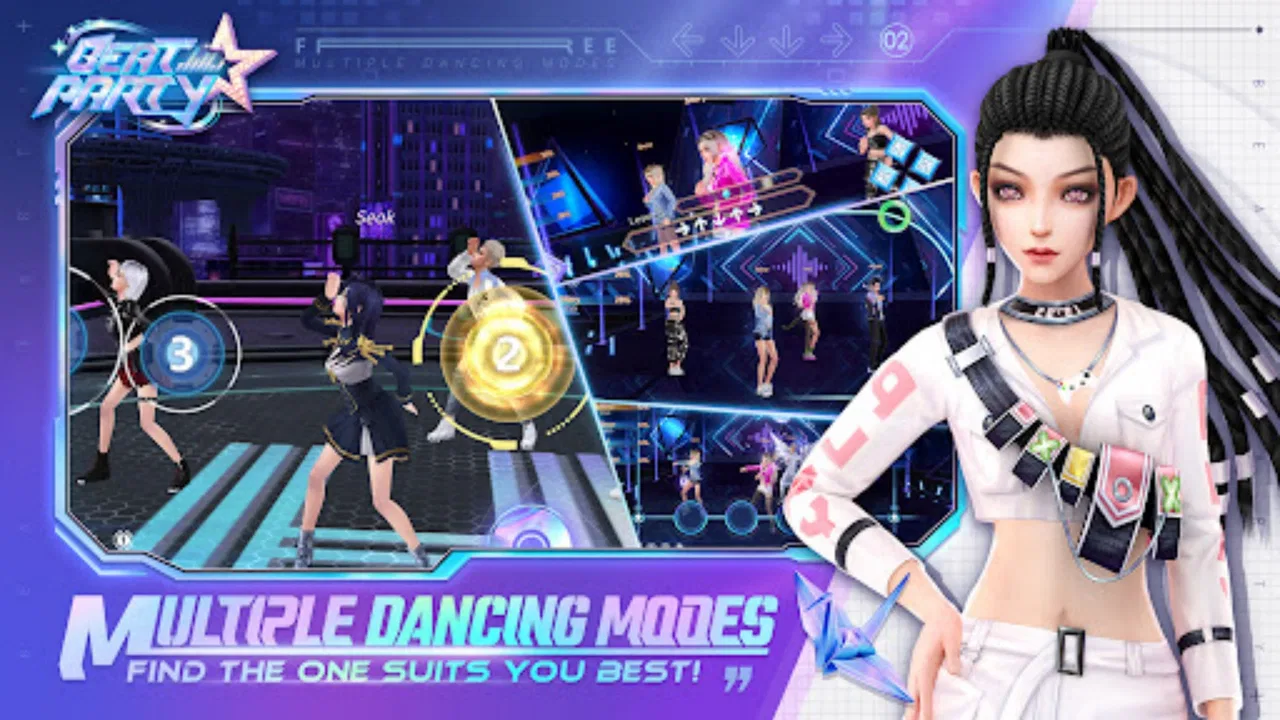
The first thing to understand is that this is not simply a music player with a dancing theme. It is an idol game built around rhythm action, character interaction, and the feeling of progressing through a lively entertainment world. I approached it expecting a straightforward tap-along game, but the presentation encouraged me to pay attention to the characters and the wider social atmosphere as well as the notes.
You May Also Like

 AccuWeather: Weather Radar
AccuWeather Review: A Quick, Clear Forecast for Everyday Decisions
For everyday plans, the best forecast is the one you can understand quickly. AccuWeather makes rain timing, radar, and local conditions easy to act on, with a few trade-offs.

 Hill Climb Racing
Why Hill Climb Racing Still Turns Crashes Into One More Run
A tiny car, a bumpy hill and one more upgrade: Hill Climb Racing keeps resurfacing because its simple chaos makes every near-miss feel personal.

 AliExpress - Shopping App
AliExpress Makes Global Shopping Feel Personal, but Shoppers Bear the Risk
AliExpress turns a global marketplace into a pocket-sized discovery engine. Its reach is useful, its shopping loop compelling, and its trade-offs easy to miss.

 Lords Mobile: Kingdom Wars
Lords Mobile Is a Kingdom-Building Routine, Not a Quick Match
A case-by-case verdict on the building, battles, device demands, and social commitments that make Lords Mobile rewarding for some players and exhausting for others.

 PDF Scanner app - TapScanner
TapScanner Makes Paperwork Easier to Capture, Check, and Share
TapScanner makes scanning with a phone feel less like a rescue operation and more like a dependable step in getting work done. Its capture tools are useful, though not flawless.

 Block Blast!
 Shows How Much a Puzzle Game Can Leave Out
A quiet grid game shows why puzzle players increasingly value instant clarity, repeatable skill and low-pressure play—and where the genre still needs to catch up.
More From Our News Desk
View All News


The store summary points toward dancing, friendship, and music, and that combination is important. Players who only want a pure score-chasing rhythm game may find the idol elements slower than necessary. On the other hand, anyone who enjoys seeing a game wrap simple musical actions in a character-focused setting will probably understand the appeal quickly. The experience is more relaxed when treated as a small daily pastime than as a serious test of timing.
The game has attracted over 50 thousand installs and holds a 4.0 average from around 600 ratings, with close to 200 written reviews. Those figures suggest a modest but established audience rather than a huge mainstream hit. I would read that as a reason to try it with realistic expectations: there is enough interest to make the game feel like a real community product, but it is not necessarily the first choice for someone looking for the largest possible rhythm-game ecosystem.
Because it is free to start, the sensible approach is to play through the opening experience before considering any purchase. Optional items range from about one dollar to nearly one hundred dollars each, so the difference between casually trying the game and spending heavily is significant. I would keep purchase controls protected, especially when sharing a phone with younger players. The age rating is Everyone, but that does not remove the need for sensible spending limits.
How I would approach the first session
I would begin with the sound at a comfortable level and enough battery available for a few uninterrupted attempts. Rhythm games are much easier to judge when the music is clear, and a first session interrupted by notifications, low battery warnings, or a rushed commute can make the controls seem worse than they are.
Rather than trying to understand every character or menu immediately, I would look for the most direct route into a song or dance activity. The first meaningful goal should be simple: complete one playable sequence and notice how the game expects input to match the music. That gives a better impression of the game than spending the opening minutes browsing screens.
My useful tip here is to treat the first attempt as calibration, not a performance. Watch where the notes or prompts appear, listen for the beat, and notice whether the game rewards early, centered, or late contact. A player who focuses only on the final score may miss the more important lesson: rhythm games often reveal their control language through repetition.
Getting from installation to a first success
For a new player, the most reassuring route is to choose the simplest available activity, follow the opening instructions, and finish a complete song or dance sequence before changing any settings. The first successful action is not necessarily achieving a perfect result. It is completing the interaction without feeling lost, then understanding why a particular input worked.
I recommend keeping the first few attempts deliberately slow in your head, even if the music feels energetic. Instead of chasing every prompt with panic, divide the sequence into small groups. Look ahead for the next action while your finger handles the current one. This habit is especially useful on a phone, where the screen is smaller than a tablet and visual effects can compete with the actual rhythm cues.
If the opening activity feels difficult, repeating it immediately is usually more useful than jumping through every menu. A second attempt lets you compare mistakes instead of guessing. Did you miss because you tapped too early, because you watched the character instead of the cue, or because the screen became visually busy? Identifying that difference turns a vague feeling of failure into a practical adjustment.
Another helpful workflow is to play with the same hand position for several attempts. Moving the phone around changes how your fingers reach the screen and can make timing feel inconsistent. I found that a stable grip makes it easier to learn the spacing of the controls, particularly when playing while seated. This is a small habit, but it matters more than repeatedly changing characters or menus in search of an instant improvement.
Once a first sequence is complete, take a moment to explore the surrounding idol and friendship elements rather than rushing straight into purchases. The game’s identity comes from the blend of rhythm action and character-focused progression. If that layer does not interest you after the first session, the game may not become more enjoyable simply because you unlock more screens.
Where first-time players may become confused
The biggest possible source of confusion is expecting every part of the game to behave like a conventional standalone rhythm challenge. Beat Party:Rhythm Dance Game presents itself as a broader idol experience, so some of the time is likely to be spent moving between musical action and the surrounding game structure. A player who wants a song list and nothing else may interpret that as unnecessary friction, while a player who likes character context may see it as part of the reward.
It is also easy to mistake visual energy for gameplay information. Dancing characters, bright presentation, and musical movement create atmosphere, but they are not always the same thing as the timing cue you need to follow. I would train myself to identify the repeatable visual signal that corresponds to an input and give that priority over decorative animation.
Another common mistake is assuming that a missed note means the whole attempt is ruined. In a casual music game, continuing after a mistake is valuable because it teaches the later pattern. Restarting every time the opening is imperfect can make the experience feel harsher than it needs to be. I would finish the sequence whenever possible, then repeat only when I had a clear reason to improve a particular section.
Players may also wonder whether the game is suitable for short sessions. In my view, it is best used that way, provided you choose a clear objective before starting. One session might be about learning the timing; another might be about completing an activity; a later one might be about spending time with the idol and friendship side. Without a small goal, the menus and progression can feel less focused.
The free-to-play structure is another point to understand early. A free download does not mean every later option is free, and the listed in-app purchase range is wide. I would not treat a purchase as a solution to weak rhythm skills. First learn the controls and decide whether the character and music presentation genuinely hold your attention. Spending before that decision can turn a casual experiment into an unnecessary expense.
How it compares with other music games
Compared with a pure tap-timing game, this title is more interested in the idol fantasy and the feeling of participating in a musical social world. A specialist rhythm game may offer a cleaner interface, more obvious score optimization, or a stronger focus on technical accuracy. Beat Party:Rhythm Dance Game is a better fit for someone who wants rhythm play wrapped in a friendlier character experience.
Compared with a general social or avatar game, it gives music a more central role. The dancing is not just decoration; it is part of the reason to return. That makes it a useful middle ground for players who enjoy customizing or following characters but still want an activity they can actively perform rather than simply watch.
The trade-off is focus. If your main goal is to improve at difficult rhythm patterns, a dedicated rhythm title may be more satisfying. If you dislike idol themes, friendship systems, or repeated progression around characters, the extra structure may feel like an obstacle. I would choose this game for atmosphere and approachable musical interaction, not for the deepest competitive scoring system.
Everyday situations where it works well
I can see this fitting naturally into a short break between errands, a quiet few minutes before bed, or a commute when the player has a stable connection and enough battery. The best use case is a player who wants something more active than scrolling but less demanding than a long console session. A single completed activity can provide a sense of progress without requiring an entire evening.
It can also work as a shared conversation starter between friends who enjoy idol games. One person can compare reactions to the music and characters while another focuses on the rhythm. I would not recommend handing it to a group expecting a fully organized local multiplayer activity, because the strongest value here is the individual mobile play loop and its personal progression.
For younger players, the Everyone rating makes the theme broadly accessible, but I would still supervise purchases. The practical rule is simple: use device-level purchase protection and decide in advance whether optional items are allowed. That keeps the free starting experience separate from impulse spending.
What may limit long-term enjoyment
The game’s most important limitation is that its appeal depends heavily on whether the player likes the complete package. If the music, idol presentation, and character interactions all work for you, the repeated rhythm sessions have a reason to continue. If only the tapping appeals, the surrounding structure may gradually feel like a detour.
There is also a difference between accessible play and demanding mastery. I found the former more convincing than the latter. Players seeking increasingly difficult technical challenges should compare it with games built specifically around advanced chart practice. This one is more suitable for easing into the genre, relaxing with musical action, and enjoying the presentation.
Device age can matter as well. Android 7.0 compatibility is helpful for owners of older phones, but compatibility does not guarantee identical smoothness across every model. If animations feel distracting or input seems inconsistent, I would first try closing other apps, stabilizing the phone, and checking whether the issue appears repeatedly. A rhythm game needs dependable response, so persistent performance trouble is a legitimate reason to choose a lighter alternative.
My recommendation for a new player
I recommend starting with a no-spending trial and a very specific first-session plan: enter the main musical activity, complete one sequence, repeat it once, and then decide whether the idol and friendship elements add enjoyment. That process answers the important questions quickly. You will learn whether the timing feels comfortable, whether the presentation keeps your attention, and whether the broader progression is something you want to explore.
My second tip is to judge improvement by control rather than by a single score. When you can recognize the next cue, recover after a mistake, and finish a sequence without feeling rushed, you have made real progress even if the result is not perfect. This mindset makes the game more welcoming and prevents the opening session from becoming a frustrating test.
My third tip is to separate curiosity from commitment. Explore the free experience first, especially because optional purchases can become expensive at the upper end of the range. The game is at its best when the player chooses it for its music-and-idol blend, not when a purchase is expected to manufacture interest.
After that first trial, the next step is to choose the part you genuinely enjoy. If it is the rhythm action, practice the same activities and refine your timing. If it is the characters and social atmosphere, spend more time with those systems instead of forcing yourself to chase scores. If neither side holds your attention, moving to a more focused rhythm game is the better decision.
Overall, Beat Party:Rhythm Dance Game is a pleasant free entry point for players who want music, dancing, and idol-style interaction in one mobile package. I appreciate that it can be approached casually, and I think its broad age rating makes it easy to recommend as a first experiment. Its main weakness is equally clear: players looking for a pure, technically deep rhythm title may find the extra presentation and progression less efficient.
With a 4.0 average from around 600 ratings, the game has earned a reasonable reception, but I would still let your own first few sessions decide. For me, the strongest recommendation goes to newcomers who want a colorful musical pastime and do not mind character-focused structure. If that sounds like you, install it, aim for one complete successful sequence, and only then decide how far you want to take the party.
FAQs for Beat Party:Rhythm Dance Game
01What is Beat Party: Rhythm Dance Game?
Beat Party: Rhythm Dance Game is a music-focused mobile game that combines rhythm challenges, dancing, and social interaction. Players follow songs by tapping or matching on-screen prompts in time with the beat, while also customizing their character and participating in different activities. The experience is designed for casual play, but better timing and practice can help you achieve higher scores and unlock more content.
02How do you play Beat Party: Rhythm Dance Game?
The main gameplay requires you to watch the screen carefully and perform actions according to the rhythm of the selected song. Depending on the mode, this may involve tapping, holding, or following movement prompts with accurate timing. Completing songs successfully earns rewards and helps improve your progress. New players should begin with easier tracks to learn the controls before attempting faster or more demanding challenges.
03Does Beat Party: Rhythm Dance Game require an internet connection?
An internet connection is generally important for Beat Party: Rhythm Dance Game because the app may need to load songs, synchronize progress, display events, and connect you with other players. Some basic content might be available after loading, but offline access can be limited and should not be assumed. A stable connection is recommended, particularly when joining multiplayer activities or downloading additional game resources.
04Is Beat Party: Rhythm Dance Game free to download and play?
Beat Party: Rhythm Dance Game can typically be downloaded for free, allowing players to try its core features without an upfront purchase. However, free-to-play games commonly include optional in-app purchases for virtual currency, cosmetic items, upgrades, or other benefits. These purchases are not necessarily required to enjoy the game, but users should review the store listing and enable purchase restrictions if children use the device.
05Is Beat Party: Rhythm Dance Game suitable for children and all devices?
The game may appeal to younger players because of its music, colorful presentation, and social features, but parents should check the official age rating before installation. Online interaction, advertising, and in-app purchases can vary by version and region. Performance also depends on the phone or tablet, so older devices may experience slower loading, reduced graphics quality, or less responsive controls during busy scenes.
Pros
- Wide range of upbeat songs and dance routines to keep sessions varied.
- Colorful visuals and smooth animations make performances enjoyable to watch.
- Regular events and challenges provide extra goals beyond the main gameplay.
- Avatar customization lets players create a look that matches their style.
- Social features make it easy to compare progress and interact with other dancers.
Cons
- Some songs
- outfits
- and upgrades may require in-app purchases.
- Progress can feel slower without spending premium currency or using boosters.
- The game may consume significant battery during longer dance sessions.
- A stable internet connection is often needed for events and social features.
- Frequent pop-ups and promotional offers can interrupt the overall experience.

Beat Party:Rhythm Dance Game
Gallery